
Immerse Yourself in a Transformative Journey to Winning

- What: Tokaido Board Game
- When: 8 years and up
- Why: Fun, educational, wide age range
- Where: Amazon
Fancy a trip to Japan? Want to explore games that highlight other cultures? Looking for a fun family game to play with your older kids? If you’d like to take a journey through the ancient traditions of the Far East, book your next journey with Tokaido.


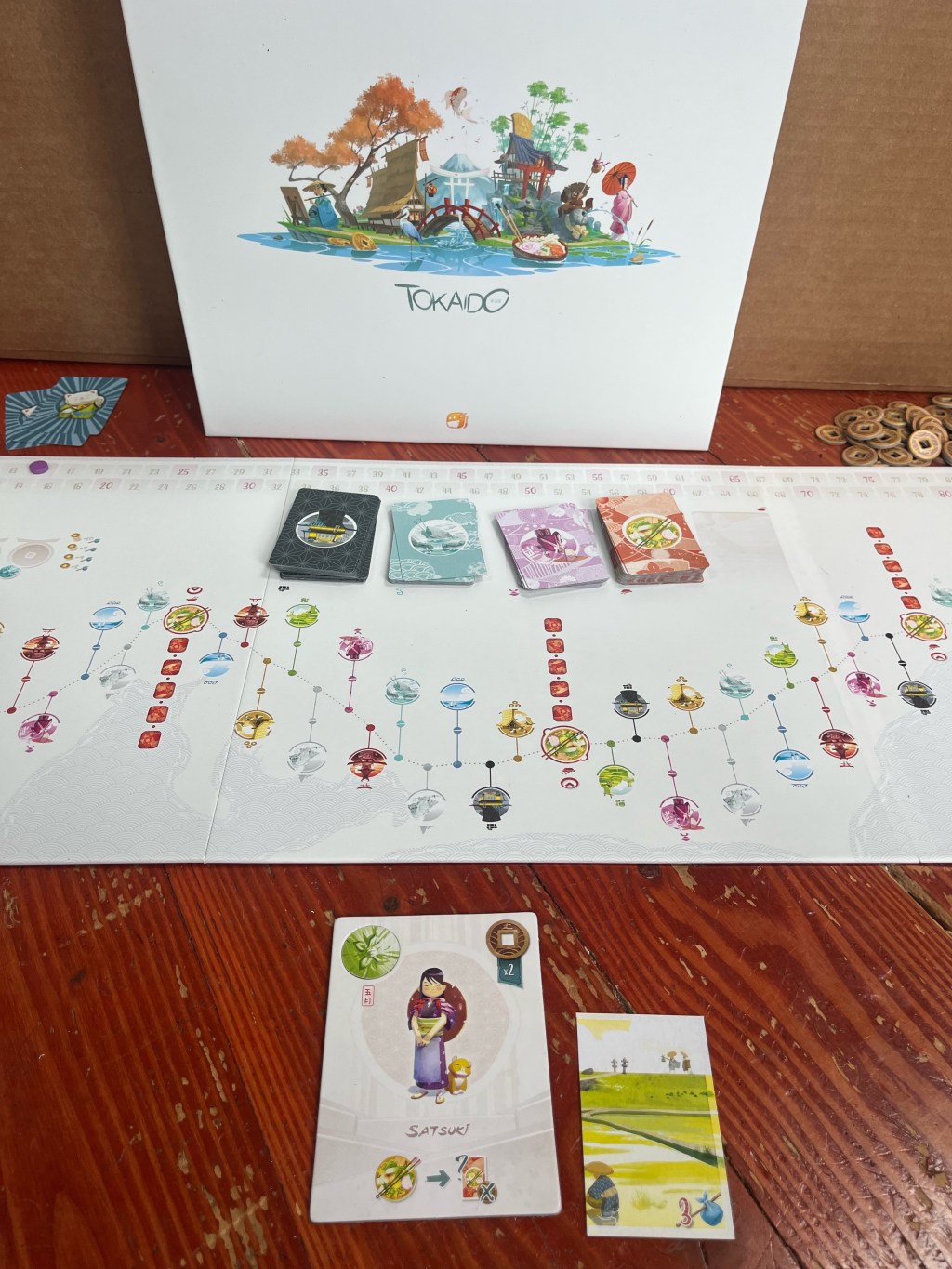
This board game brings the old East Sea Road to life as the backdrop for a journey to collect points. To set up the game, sort the panoramic cards into three categories: water, mountains, and grasslands. Then place the other cards, including meals, souvenirs, hot springs, and encounters, in their assigned spots on the board. Each player then chooses one of five colored meeples and the accompanying score tract marker.

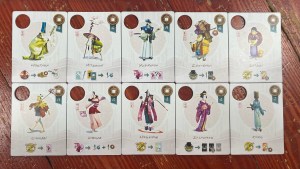
One person shuffles the character cards and hands each player two. All traveler tiles have a different special power, as denoted at the bottom of the card. Each one also begins the game with a different amount of coins, shown in the top right. In general, the better the special power, the less money a character gets to start the game. Once each player has chosen a character tile and discarded the other traveler, shuffle the meeples.
Place each meeple into a spot at the beginning of the road. The person who occupies the last spot gets to move first. Unlike many board games, this one has no dice or spinner. Each one of up to five players can choose how many spaces to move on each turn. Each dot along the path allows space for one player. For four or five players, use the secondary dots, allowing some stops to have two positions. The colored circle on the path indicates what action the player takes when stopping there.
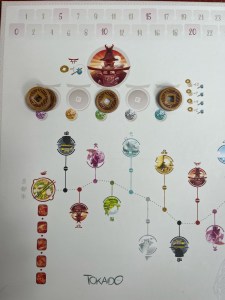
Souvenir shops let travelers take the top three cards from the black souvenir deck. Players may purchase as many of the three cards as they like, or none at all, putting any discarded cards back at the bottom of the deck. Reddish orange temple stops allow players to donate an amount of their choosing to the temple along the top of the board. Pink encounter waypoints offers a variety of bonuses, from points to extra panoramic cards and more. Hot springs, water, mountain, and grassland stops let the player collect a card from the respective stack and earn the number of points marked on the card. Gold spots earn a player three coin tokens, but no points along the scoring track.

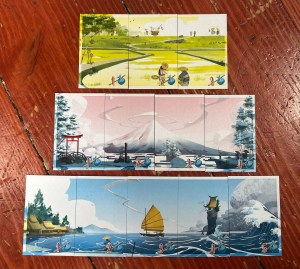
After each turn, each player should move their marker along the scoring track equivalent to the number of points they’ve earned. Panoramic cards increase in value as players collect more in each series. For instance, the first grasslands card will earn one point, the second one earns two points, and so on. Grasslands have three cards to collect, mountains have four cards to collect, and water has five cards in the series. The first player to collect a complete set during the game also receives a bonus card worth three points, with one bonus available for each of the three types.
Souvenirs come from four different types, denoted by the small icon in the bottom right of the souvenir card. Collect sets of four to earn points, where the first card earns one point, the second card earns three points, the third card gets five points, and the fourth and final card earns seven points. Players can have as many sets as they like, but each set must contain only one card from each of the four types of souvenir cards.
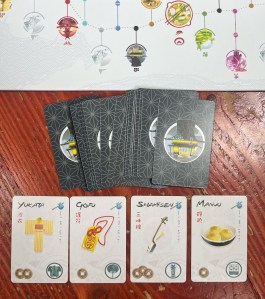
Along the way, every player stops at each inn, where they have the option to purchase a meal. The first person takes the top cards in the meal deck equal to the number of players plus one. They may then select which meal to buy, without revealing the remaining meal cards to the other players. The next person to arrive chooses from the cards already taken from the deck, minus the one purchased by the other player. Play continues in this fashion until all players get to the inn.
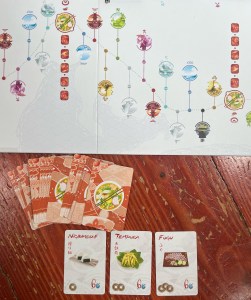
No player leaves the inn until all players have arrived. Upon departure, the last person to arrive leaves first, and play continues, with the person furthest back getting the next turn. At the end of the game, in addition to the panoramic bonuses awarded during play, the game has four achievement cards, each worth three points. The first one goes to the player with the most meal value. Add up the cost of each meal to calculate total value.
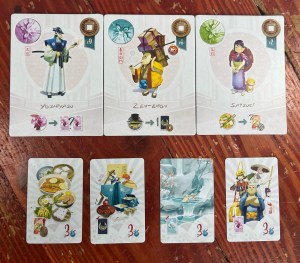
The second bonus goes to the player who visited the most hot springs. The third bonus awards the player with the highest number of souvenirs purchased. And the final bonus rewards the player with the most encounter cards. In addition, players receive extra points for temple donations. The person with the highest number of donations earns ten points. Second highest gets seven points, third highest gets four points, and fourth place receives two points. The player with the highest number of points along the track wins the game.
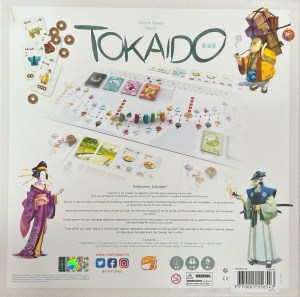
The entire game moves quickly, with players leapfrogging over each other to reach coveted stops. Total game time varies between twenty and fifty minutes, and averages around half an hour. The game has lots of small pieces not suitable for young children, and the math skills required to compare different moves, point totals, and strategy work best for older kids. But everyone can enjoy the colorful artwork that illustrates the game and cards.
If your family needs some new excitement for your next family game night or gathering, check out Tokaido and explore the old East Sea Road together.


 Practically Apparent
Leave a comment